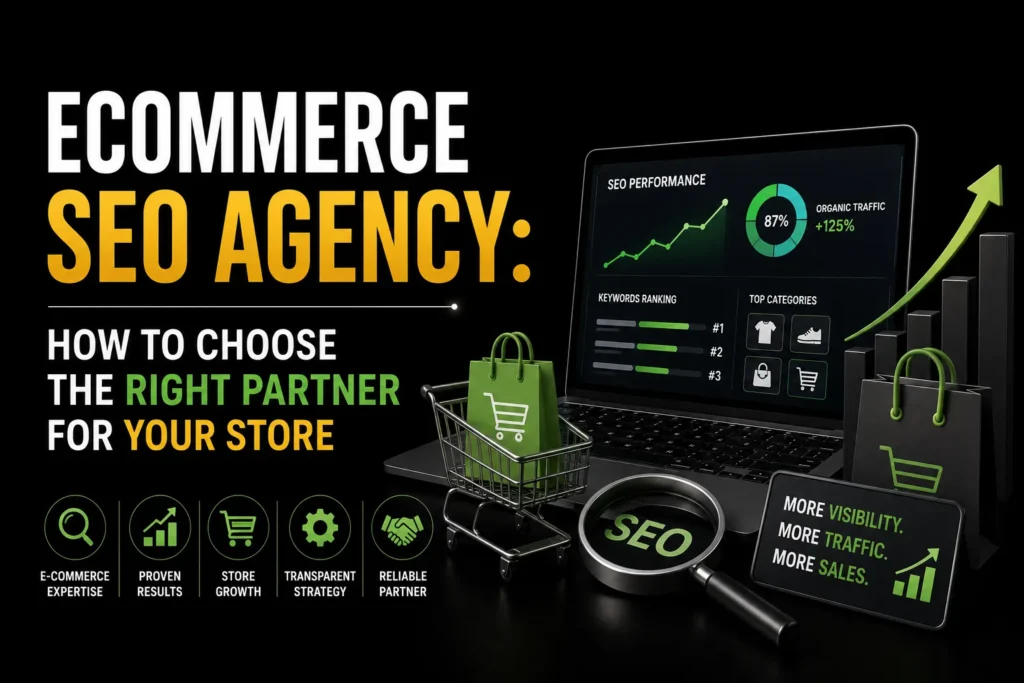
Choosing the right ecommerce SEO agency can be the difference between an online store that thrives and one that disappears into the depths of Google. Ecommerce SEO is fundamentally different from regular SEO because it involves hundreds or thousands of product pages, faceted navigation, category structures, and unique technical challenges. This guide explains what an ecommerce SEO agency does, how to choose one, and what results to expect. If you are looking for an individual expert rather than a full agency, see our guide to finding an ecommerce SEO consultant.
TL;DR: The right ecommerce SEO agency optimizes your product pages, category structure, technical SEO, and content strategy to drive organic traffic and revenue. Look for an agency with proven ecommerce case studies, platform expertise (Shopify, WooCommerce, Magento), and a focus on revenue, not just traffic.
What Does an Ecommerce SEO Agency Do?
An ecommerce SEO agency specializes in optimizing online stores for search engines. The core services include:
- Technical SEO audits: Identifying crawl errors, indexation issues, duplicate content from product variants, and faceted navigation problems that prevent product pages from ranking.
- Keyword research for products: Finding the keywords your customers actually search for, then mapping them to the right product and category pages.
- On-page optimization: Optimizing product titles, meta descriptions, headings, image alt text, and product descriptions for target keywords.
- Category page optimization: Category pages are often the highest traffic pages on an ecommerce site. An agency optimizes their structure, content, and internal linking.
- Site architecture and internal linking: Ensuring link equity flows from the homepage to category pages to product pages efficiently.
- Content marketing: Creating buying guides, blog posts, and comparison content that captures top of funnel traffic and drives it to product pages.
- Schema markup: Adding Product, Offer, Review, and BreadcrumbList schema for rich results in search. Google’s introduction to structured data covers the types that apply to ecommerce.
Why Ecommerce SEO Is Different from Regular SEO
Ecommerce sites face unique SEO challenges that regular business websites do not:
- Scale: An ecommerce site may have thousands of product pages, each needing unique titles, descriptions, and optimization.
- Faceted navigation: Filters for size, color, price, and brand can create thousands of duplicate URLs that dilute SEO value.
- Product churn: Products go out of stock, get discontinued, or change seasonally. Managing redirects and indexation for changing inventory is an ongoing challenge.
- Conversion focus: Ecommerce SEO is not just about traffic, it is about revenue. An agency must understand which keywords drive buyers, not just visitors.
- Platform constraints: Different platforms (Shopify, WooCommerce, Magento, BigCommerce) have different SEO capabilities and limitations. An agency must know your platform inside and out.
How to Choose an Ecommerce SEO Agency
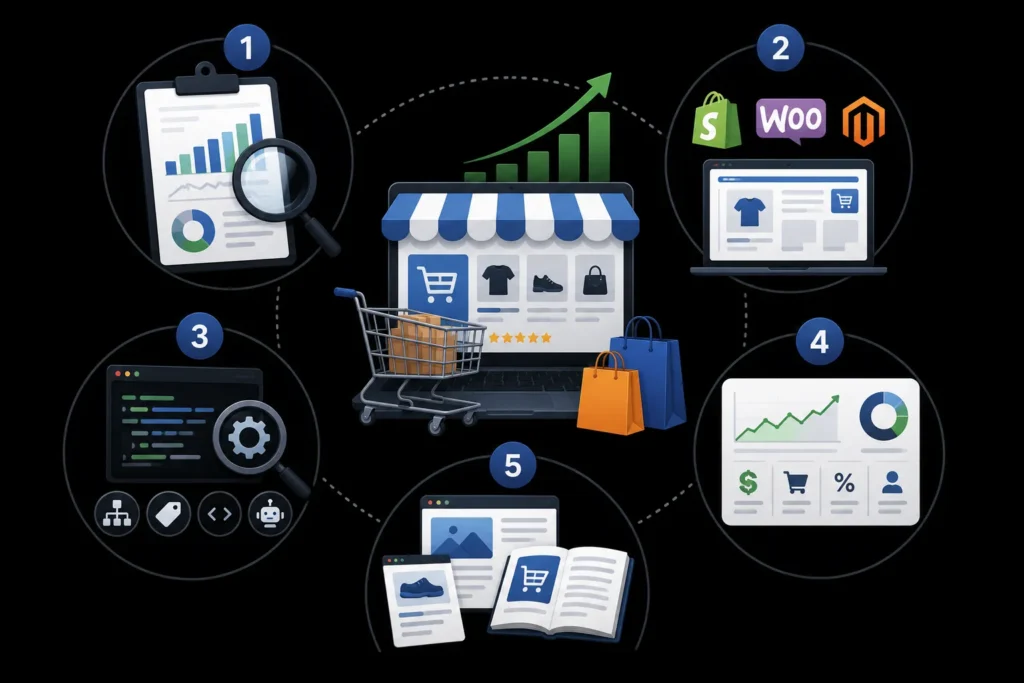
When evaluating ecommerce SEO agencies, look for these key indicators:
1. Ecommerce Specific Case Studies
Ask for case studies from other online stores. Look for metrics like organic revenue growth, number of keywords ranked, and average order value impact. General SEO case studies do not count.
2. Platform Expertise
Make sure the agency has deep experience with your ecommerce platform. Shopify SEO requires different tactics than WooCommerce or Magento. If you need a Shopify specialist, see our guide to hiring a Shopify SEO expert. For WooCommerce stores, read our WooCommerce SEO guide. Magento store owners can check our Magento SEO agency article. Shopify also publishes its own SEO documentation worth reviewing.
3. Technical SEO Depth
Ecommerce SEO is heavily technical. The agency should be able to discuss crawl budget, faceted navigation, canonical tags, pagination, and JavaScript rendering. If they only talk about content and keywords, they are not equipped for ecommerce.
4. Revenue Focused Reporting
The agency should report on organic revenue, conversion rate, and average order value, not just traffic and rankings. If they cannot connect SEO to revenue, they are not the right partner.
5. Content Strategy
Content is a major driver of ecommerce SEO. Ask how they plan to create buying guides, product comparison content, and category page content that ranks.
How Much Does an Ecommerce SEO Agency Cost?
Ecommerce SEO pricing is higher than regular SEO because of the complexity and scale involved:
- Small stores (under 500 products): Rs 30,000 to Rs 75,000 per month.
- Mid market stores (500 to 5,000 products): Rs 75,000 to Rs 2,00,000 per month.
- Large stores (5,000+ products): Rs 2,00,000 to Rs 5,00,000+ per month.
For international clients, ecommerce SEO typically costs $1,000 to $10,000 per month depending on catalog size and competition.
What is the most important ecommerce SEO factor?
There is no single most important factor, but technical SEO is the foundation. If Google cannot crawl and index your product pages efficiently, no amount of content or links will help. Start with a technical audit, then focus on product page optimization and content marketing.
Looking for an ecommerce SEO agency that drives revenue, not just traffic? Get a free consultation from MoxSEO and let us help you grow your online store.
Frequently Asked Questions
How long does ecommerce SEO take?
Most ecommerce SEO campaigns show initial traffic improvements within 3 months. Significant revenue impact typically takes 6 to 12 months, especially for new stores or competitive niches. Technical fixes can produce quick wins, while content and link building compound over time.
Which ecommerce platform is best for SEO?
Shopify, WooCommerce, and BigCommerce all have solid SEO capabilities. Magento is powerful but requires more technical expertise. The best platform depends on your catalog size, budget, and technical resources. The agency you choose should be able to optimize whichever platform you use.
Do I need an ecommerce SEO agency if I run Google Ads?
Yes. Google Ads provide immediate traffic but stop the moment you stop paying. SEO builds organic traffic that compounds over time and does not require ongoing ad spend. The most successful ecommerce businesses use both, with SEO providing long term ROI and PPC providing immediate results.
Related guides in Ecommerce SEO
- Ecommerce SEO Consultant: When to Hire One and What They Do
- E-commerce SEO Services: What’s Included and How to Choose
Need this handled for you? Explore our E-commerce SEO service.

Samruddhi Kadam is an SEO Associate at MoxSEO with 2 years of experience in keyword research, on-page SEO, content optimization, competitor analysis, and website performance tracking. She focuses on improving organic visibility, creating search-friendly content, and identifying practical opportunities to strengthen rankings. Through consistent analysis and data-driven execution, Samruddhi helps businesses attract relevant traffic and build a stronger presence in search results.