Built around the page types, customer journeys, and operational constraints that matter for this program.

HEALTHCARE SEO
Local, technical, and content systems that improve discovery while respecting medical accuracy, privacy, and the decisions patients need to make.
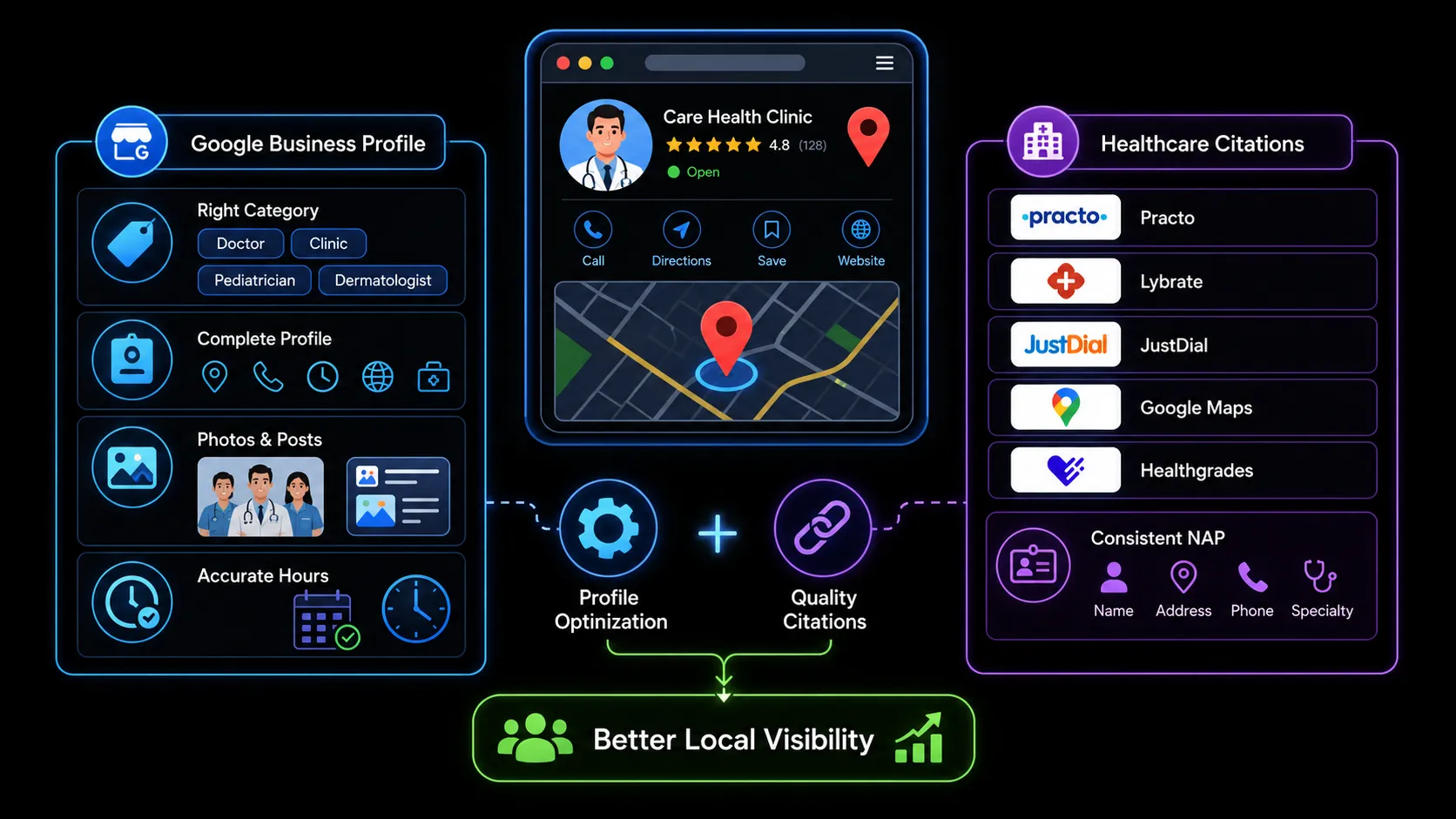
Healthcare visibility depends on more than local rankings. Patients need understandable service information, provider context, location accuracy, appropriate review practices, and clear next steps. Content also needs clinical oversight and claims proportionate to evidence.
We connect research, technical decisions, content, authority, and measurement. That gives marketing, product, engineering, and leadership a shared view of what matters, what is blocked, and what should happen next.
Built around the page types, customer journeys, and operational constraints that matter for this program.
Prioritized by likely business impact, implementation effort, and dependency risk.
Documented clearly so internal teams can understand what changes and why.
Built around the page types, customer journeys, and operational constraints that matter for this program.
Prioritized by likely business impact, implementation effort, and dependency risk.
Documented clearly so internal teams can understand what changes and why.
Map technical, content, authority, and measurement gaps against commercial priorities.
Turn evidence into a sequenced roadmap with owners, dependencies, and acceptance criteria.
Work with your team or execute directly, validating releases as they reach production.
Report what changed, what the market did, and what deserves the next investment.
Search behavior changes, platforms evolve, and every site has different constraints. Our recommendations draw from first-party data, technical inspection, customer language, and published MoxSEO research. Claims remain proportional to the evidence.
We begin with access, goals, constraints, analytics, and a focused diagnostic. The first roadmap reflects what the evidence supports, not a prewritten package.
Yes. We define owners and handoffs early, then provide implementation-ready specifications and validation so work can move through your existing release process.
Reporting connects completed work, leading search signals, qualified demand, and conversion contribution. We explain uncertainty instead of presenting attribution as perfect.
We do not guarantee rankings, traffic, revenue, or fixed timelines controlled by platforms and markets. We promise transparent priorities, careful implementation, and evidence-led decisions.
Industry operating model
A healthcare journey may begin with symptoms, conditions, treatments, clinicians, insurance, availability, location, or urgent questions. The website must make the appropriate next step clear without presenting generalized marketing content as individual medical advice.
We organize services, conditions, treatments, providers, locations, preparation, recovery, costs, insurance, and appointment pathways according to real patient questions. Pages should disclose authorship or clinical review where appropriate, show update dates, use understandable language, and avoid unsupported outcome claims.
Clinical reviewers own medical accuracy; operations own location and appointment facts; privacy owners set analytics and form boundaries; content and development teams maintain templates and structured data. Review intervals should reflect the risk and volatility of the information.
Measurement focuses on valid local discovery, appointment-path completion, qualified calls, provider and service findability, accessibility, and content freshness. We avoid treating sensitive health data as ordinary marketing attributes and document what analytics cannot establish.
Choose a priority service and follow the patient journey across condition information, clinician, location, preparation, cost or insurance, appointment, and follow-up. Close factual and accessibility gaps before pursuing broader visibility.
Clinicians review medical statements, operations owns availability and location facts, privacy sets data boundaries, accessibility is shared by design and development, and marketing maintains review dates.
Industry expertise should be visible in the decisions a team makes: information architecture, authority requirements, customer language, compliance boundaries, platform constraints, conversion paths, and measurement. Use these links to move from the industry overview into the relevant work.
Review the service requirements most directly connected to the industry constraints described on this page.
See how comparable architecture, content, local discovery, or measurement questions were handled in published work.
Continue into the related capability or research standard when the problem crosses functional boundaries.
Understand ownership, dependencies, validation, and the sequence from diagnosis through implementation.
Meet the documented leadership and specialist responsibilities behind the operating model.
Share the website, audience, regulation, platform, commercial objective, and current measurement quality.
Bring the site, the goals, and the constraints. We will help define the most useful first move.