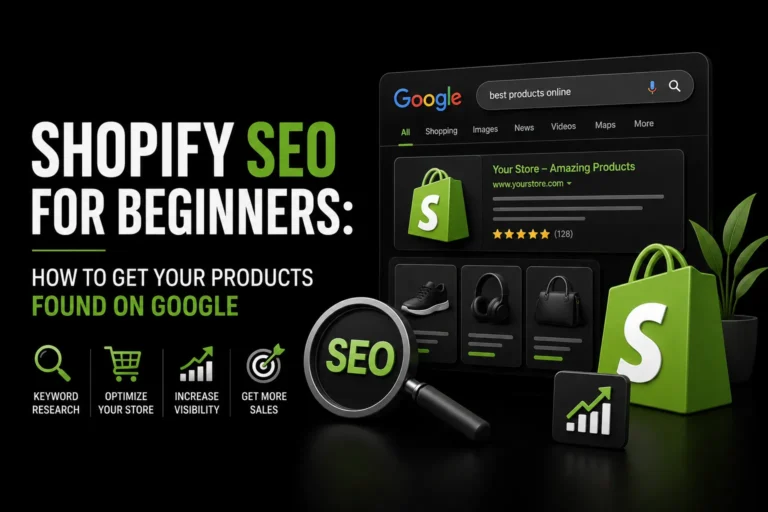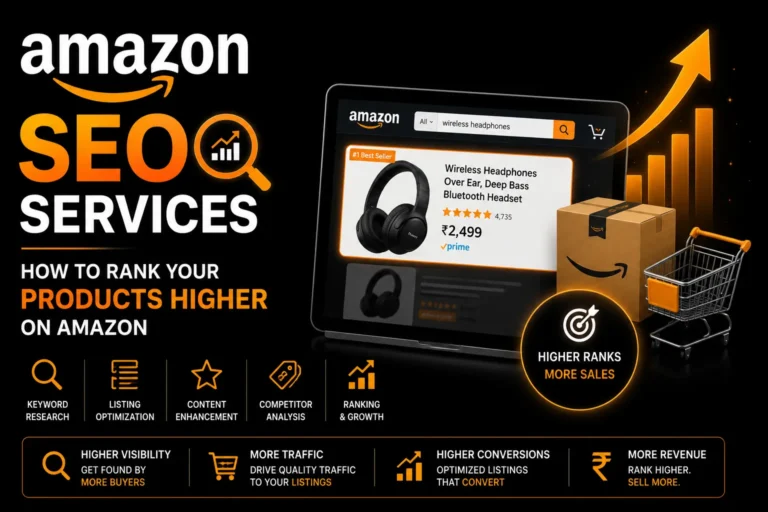
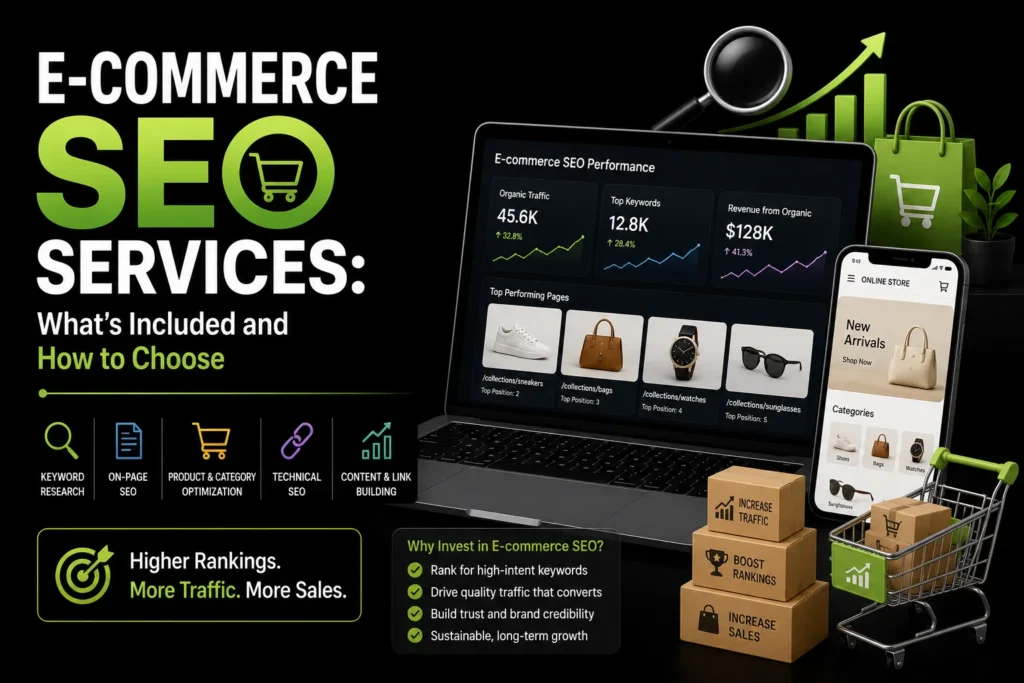
E-commerce SEO is different from regular SEO. You are not optimizing a handful of pages. You are optimizing hundreds or thousands of product pages, category pages, and filtering systems, all competing for different keywords and all needing to load fast, convert well, and rank above competitors who are doing the same thing. That is why e-commerce SEO services exist as a specialized discipline.
If you run an online store and your products are not showing up in Google search results, you are losing sales to competitors whose products are. This guide explains what e-commerce SEO services include, how much they cost, and how to choose the right provider for your store. For help choosing an agency, see our guide to ecommerce SEO agencies.
TL;DR: E-commerce SEO services optimize product pages, category pages, site structure, schema markup, and technical performance to help your online store rank higher in Google. Expect to pay between $1,000 and $5,000 per month (or ₹40,000 to ₹1,50,000 in India) depending on catalog size and competition. Choose a provider with e-commerce-specific experience, not a generalist. MoxSEO offers e-commerce SEO services for stores on Shopify, WordPress, and custom platforms.
What Are E-commerce SEO Services?
E-commerce SEO services are search engine optimization services designed specifically for online stores. Unlike general SEO, which focuses on a small number of pages, e-commerce SEO deals with large product catalogs, faceted navigation, product schema, and unique challenges like out-of-stock products and duplicate content from product descriptions.
The core components include:
- Product page optimization: Unique title tags, meta descriptions, headings, and content for each product page targeting transactional keywords.
- Category page optimization: Optimizing category and subcategory pages for broader search terms with higher volume.
- Technical SEO: Site speed, crawlability, faceted navigation handling, pagination, and mobile optimization.
- Schema markup: Product schema, review schema, price schema, and availability schema for rich results. Google’s introduction to structured data covers the schema types that apply to ecommerce stores.
- Internal linking: Building a logical link structure between categories, subcategories, and products.
- Content creation: Buying guides, blog posts, and category descriptions that target informational keywords and support product pages.
- Product feed optimization: Optimizing your Google Shopping feed for better visibility in shopping results.
Why E-commerce Stores Need Specialized SEO
Online stores face SEO challenges that regular websites do not. Product pages often have thin content (just a title, price, and short description), which Google struggles to rank. Category pages change constantly as products go in and out of stock. Faceted navigation (filters for size, color, price) creates thousands of duplicate URLs. Product descriptions are often copied from manufacturers, creating duplicate content across hundreds of stores.
A general SEO provider who has only worked with service businesses or blogs will not know how to handle these challenges. An e-commerce SEO specialist understands product schema, canonical tags for faceted URLs, pagination strategy, and how to write product content that ranks without duplicating manufacturer descriptions. For individual expert guidance, see our guide to finding an ecommerce SEO consultant.
How Much Do E-commerce SEO Services Cost?
E-commerce SEO is more expensive than general SEO because it involves more pages, more technical work, and ongoing optimization of a changing catalog.
- Small store (under 100 products): $1,000 to $2,500/month (₹40,000 to ₹75,000/month)
- Mid-size store (100 to 1,000 products): $2,500 to $5,000/month (₹75,000 to ₹1,50,000/month)
- Large store (1,000+ products): $5,000 to $15,000+/month (₹1,50,000 to ₹5,00,000+/month)
How to Choose an E-commerce SEO Provider
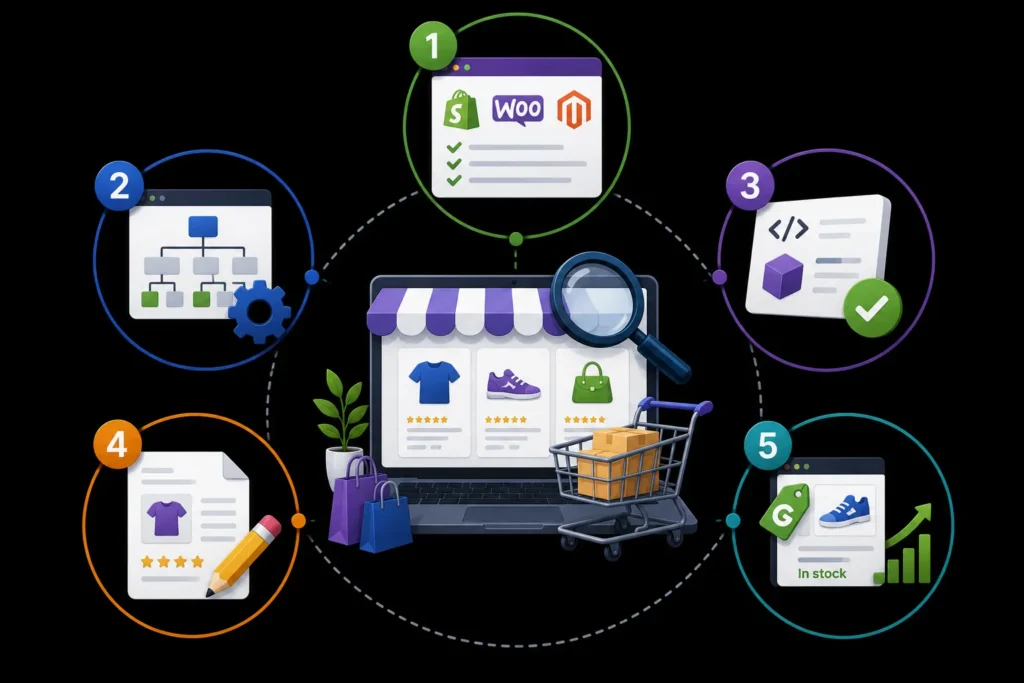
- Ask about their e-commerce experience: What platforms have they worked with (Shopify, WooCommerce, Magento, custom)? Can they show ranking improvements for product or category pages?
- Check their understanding of technical e-commerce SEO: Ask how they handle faceted navigation, pagination, and out-of-stock products. If they cannot answer, they are not e-commerce specialists. Google’s guide to consolidating duplicate URLs is a good reference point.
- Ask about schema markup: Product schema, review schema, and availability schema are essential for e-commerce rich results. Confirm they implement these.
- Check their content approach: Do they write unique product descriptions, or just optimize existing manufacturer copy? Unique content is critical for product page rankings.
- Ask about Google Shopping: If you run Shopping ads, ask how they optimize the product feed for better ad performance.
Get Started With E-commerce SEO
If your products are not ranking on Google, your competitors are getting the customers who should be yours. E-commerce SEO is the most cost-effective way to drive consistent, free traffic to your product pages over the long term.
MoxSEO offers e-commerce SEO services for online stores in India and globally. Get a free quote to see how we can help your store rank higher and sell more.
Frequently Asked Questions
How much do e-commerce SEO services cost?
E-commerce SEO services typically cost between $1,000 and $5,000 per month for small to mid-size stores, and $5,000 to $15,000 or more for large stores with 1,000+ products. In India, prices range from ₹40,000 to ₹1,50,000 per month for most stores. The cost depends on catalog size, platform, industry competitiveness, and the scope of work.
How long does e-commerce SEO take?
E-commerce SEO typically takes 3 to 6 months to show meaningful results. Product pages may start ranking for long-tail keywords within 2 to 3 months, while category pages targeting competitive terms can take 6 to 12 months. The timeline depends on your current site authority, catalog size, and competition level.
What is the difference between e-commerce SEO and regular SEO?
E-commerce SEO deals with large product catalogs, faceted navigation, product schema, out-of-stock pages, and duplicate content from manufacturer descriptions. Regular SEO typically involves a smaller number of pages with more content. E-commerce SEO requires specialized technical knowledge and ongoing optimization as products change.
Do I need e-commerce SEO if I run Google Shopping ads?
es. Google Shopping ads and organic SEO work together. Shopping ads drive paid traffic while you pay for clicks, while SEO builds free organic traffic that compounds over time. Stores that rank well organically also tend to perform better in Shopping ads because Google sees them as more authoritative.
Which e-commerce platforms are best for SEO?
Shopify and WooCommerce (WordPress) are the most SEO-friendly e-commerce platforms for small to mid-size stores. Both allow custom title tags, meta descriptions, schema markup, and content creation. For large stores, Magento or custom platforms offer more control but require more technical SEO work. See our guides to WooCommerce SEO and Shopify SEO for platform specific guidance. MoxSEO offers SEO services for Shopify and WordPress e-commerce stores.
Related guides in Ecommerce SEO
- Ecommerce SEO Agency: How to Choose the Right Partner for Your Store
- Ecommerce SEO Consultant: When to Hire One and What They Do
Need this handled for you? Explore our E-commerce SEO service.

Samruddhi Kadam is an SEO Associate at MoxSEO with 2 years of experience in keyword research, on-page SEO, content optimization, competitor analysis, and website performance tracking. She focuses on improving organic visibility, creating search-friendly content, and identifying practical opportunities to strengthen rankings. Through consistent analysis and data-driven execution, Samruddhi helps businesses attract relevant traffic and build a stronger presence in search results.