




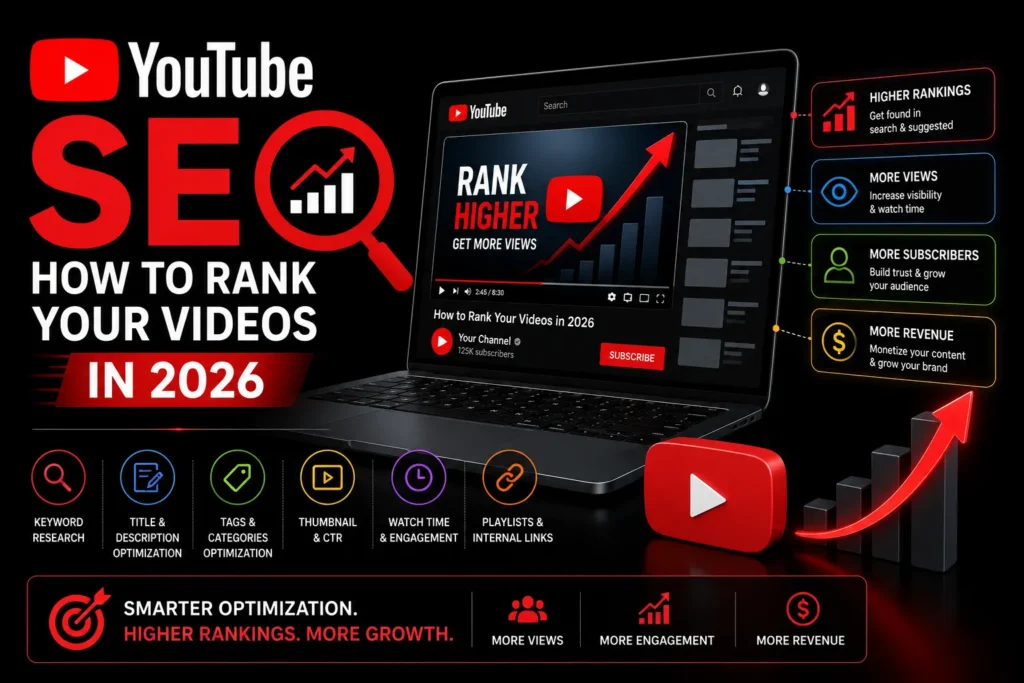
YouTube is the second largest search engine in the world, processing more searches than Bing, Yahoo, and AOL combined. Over 2.5 billion people use YouTube every month. Yet most creators and businesses treat YouTube as a video hosting platform, not a search engine. They upload videos, hope for the best, and wonder why nobody watches. YouTube SEO changes that.
YouTube SEO is the process of optimizing your videos so they appear higher in YouTube search results, get recommended more often, and attract more views. This guide covers how YouTube SEO works, what to optimize, and how to rank your videos in 2026. For professional help, see our guide to YouTube SEO services. For quick tips, see our YouTube SEO tips.
TL;DR: YouTube SEO involves optimizing your video titles, descriptions, tags, thumbnails, and engagement signals to rank higher in YouTube search and recommendations. Focus on keyword-rich titles, detailed descriptions, custom thumbnails, and audience retention. YouTube SEO is different from Google SEO because YouTube prioritizes engagement metrics (watch time, retention, click-through rate) alongside relevance. MoxSEO offers SEO services that include YouTube optimization.
What Is YouTube SEO?
YouTube SEO is the practice of optimizing your videos and channel to rank higher in YouTube’s search results and recommendation system. Unlike Google, which primarily evaluates text content and links, YouTube evaluates video engagement signals alongside text metadata.
YouTube’s ranking factors include:
- Relevance: How well your video title, description, and content match the search query.
- Watch time: How long viewers watch your video. Longer watch time signals quality content.
- Audience retention: What percentage of your video viewers watch before clicking away. High retention means your content is engaging.
- Click-through rate (CTR): What percentage of people who see your thumbnail click on it. High CTR means your thumbnail and title are compelling.
- Engagement: Likes, comments, shares, and subscriptions after watching.
- Channel authority: How consistently your channel publishes content and how many subscribers and views it has.
YouTube’s search and discovery algorithm documentation explains how these factors work together.
How to Optimize Your Videos for YouTube Search
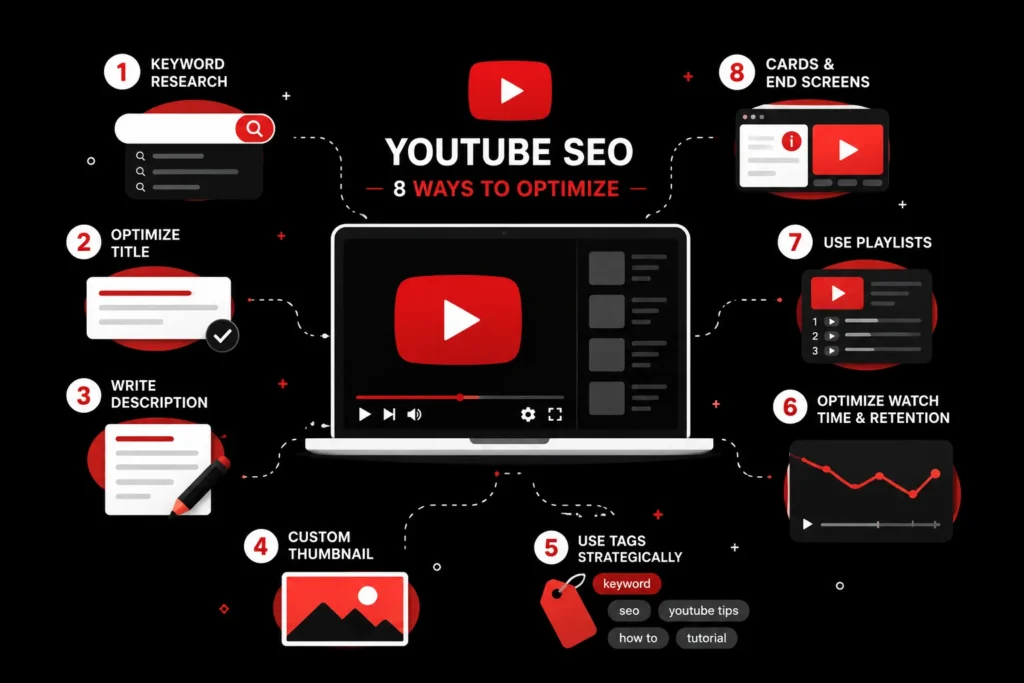
1. Do YouTube Keyword Research
YouTube keyword research is different from Google keyword research. People search differently on YouTube. They search for “how to” tutorials, reviews, and entertainment, not just products and services. Use YouTube’s autocomplete feature to find what people are searching for. Type a keyword into the YouTube search bar and see what suggestions appear. These are real searches by real users.
2. Optimize Your Video Title
Your title is the most important text element for YouTube SEO. Include your target keyword naturally in the first 60 characters. Make it compelling enough to earn the click. A good title answers the viewer’s question or promises a benefit. Avoid clickbait titles that do not deliver, because high click-through rate with low retention will hurt your rankings.
3. Write a Detailed Description
YouTube uses your video description to understand what your video is about. Include your target keyword in the first two lines (which appear in search results), then write a detailed description of at least 200 words. Include relevant keywords naturally, link to related videos and your website, and add timestamps for different sections of your video.
4. Create Custom Thumbnails
Your thumbnail is the single biggest factor in click-through rate. A compelling thumbnail can double or triple your views. Use high-contrast colors, clear text overlays, expressive faces, and a consistent style across your channel. Never use YouTube’s auto-generated thumbnails. They are almost always worse than custom ones.
5. Use Tags Strategically
Tags are less important than they used to be, but they still help YouTube understand your video’s context. Use your primary keyword as the first tag, then add related keywords and variations. Do not overdo it. 5 to 15 relevant tags are better than 50 irrelevant ones.
6. Optimize for Watch Time and Retention
Watch time and audience retention are the engagement signals YouTube values most. To improve them, plan your video structure to keep viewers engaged throughout. Start with a hook in the first 10 seconds, deliver on the promise in your title, use visual changes every 10 to 15 seconds, and cut out dead space and pauses in editing.
7. Use Playlists to Increase Session Time
Playlists keep viewers on your channel longer by automatically playing related videos. Longer sessions signal to YouTube that your channel is valuable, which boosts recommendations. Group related videos into playlists with keyword-optimized titles and descriptions.
8. Add Cards and End Screens
Cards and end screens direct viewers to other videos, playlists, or your website at the end of each video. They keep viewers on your channel instead of leaving YouTube, which improves your channel’s session time and recommendation potential.
YouTube SEO vs. Google SEO: What’s Different?
YouTube SEO and Google SEO share some principles (keyword research, metadata optimization) but differ in key ways. Google evaluates text content, links, and user experience signals. YouTube evaluates video engagement signals (watch time, retention, CTR) alongside metadata. A video can rank #1 on YouTube with no backlinks if it has strong engagement. A page can rank #1 on Google with no video if it has strong content and links.
YouTube videos can also rank in Google search results, especially for “how to” queries. Google often shows video carousels at the top of search results for tutorial-style searches. Optimizing your video for both YouTube and Google doubles your potential visibility.
What Is the Most Important YouTube SEO Factor?
There is no single factor, but audience retention is the foundation. If viewers leave your video quickly, optimized titles, descriptions, and tags will have limited impact. Start with engaging content, then improve your thumbnail, title, keywords, and channel structure.
Looking for YouTube SEO that increases views and engagement? Get a free consultation from MoxSEO and start growing your channel.
Frequently Asked Questions
How do I rank higher on YouTube search?
To rank higher on YouTube search, optimize your video title with your target keyword, write a detailed description of at least 200 words, create a compelling custom thumbnail, use relevant tags, and focus on watch time and audience retention. YouTube prioritizes engagement signals (watch time, retention, CTR) alongside relevance, so creating engaging content is just as important as keyword optimization.
What is the difference between YouTube SEO and Google SEO?
YouTube SEO focuses on video engagement signals (watch time, audience retention, click-through rate) alongside metadata (title, description, tags). Google SEO focuses on text content, backlinks, and user experience signals. YouTube videos can also rank in Google search results, especially for tutorial and how-to queries, so optimizing for both platforms can double your visibility.
How long does it take for YouTube SEO to work?
YouTube SEO can show results faster than Google SEO. A well-optimized video can start ranking for its target keyword within 24 to 48 hours of publishing. However, building channel authority and consistent viewership takes 3 to 6 months of regular publishing. The more videos you publish and the more consistently you upload, the faster your channel grows.
Do YouTube tags still matter in 2026?
Tags matter less than they used to, but they still help YouTube understand your video’s context. Use your primary keyword as the first tag, then add 5 to 15 relevant related keywords. Do not overdo it with dozens of tags. YouTube has stated that tags play a minimal role compared to title, description, and engagement signals.
How do I find the right keywords for YouTube?
Use YouTube’s autocomplete feature. Type a keyword into the YouTube search bar and see what suggestions appear. These are real searches by real users. You can also use tools like TubeBuddy or vidIQ to see search volume and competition for specific YouTube keywords. Focus on keywords with clear search intent (tutorials, reviews, how-tos) rather than broad terms.
Related guides in YouTube SEO
- YouTube SEO Services: How to Rank Your Videos on YouTube and Google
- YouTube SEO Tips: 10 Proven Ways to Rank Your Videos Higher
- YouTube SEO for Beginners: How to Get More Views on Your Videos
Need this handled for you? Explore our YouTube SEO service.

Ashish Khan is an SEO Specialist at MoxSEO with expertise in keyword research, on-page optimization, technical SEO, content strategy, and link building. He focuses on improving website visibility, strengthening search performance, and helping businesses attract relevant organic traffic. By combining competitor analysis, SEO audits, and data-driven optimization, Ashish supports sustainable ranking growth and stronger digital presence.