





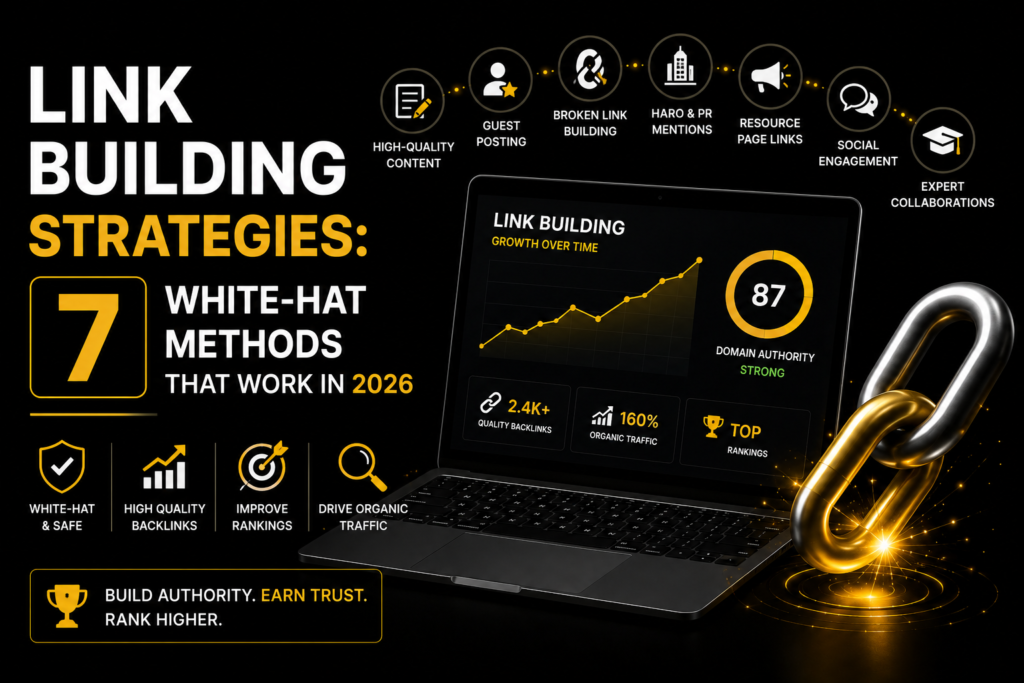
Link building is one of the most important and most misunderstood parts of SEO. Google has confirmed that backlinks remain one of its top 3 ranking factors, alongside content and RankBrain. But not all links are equal. One high-quality link from an authoritative site can be worth more than 100 low-quality links from spammy directories. For Google’s official guidance on link spam, see Google Search Central. This guide covers the link building strategies that actually work in 2026.
TL;DR: The best link building strategies in 2026 are creating linkable assets, guest posting on relevant sites, digital PR, broken link building, and building relationships with industry websites. Focus on earning links from authoritative, relevant sites rather than buying links or using automated tools. Quality always beats quantity. MoxSEO offers SEO services that include white-hat link building.
Short answer: white-hat link building means earning links that a person placed because your page is genuinely useful to their readers. Publish something worth citing, show it to people who write about the topic, fix or replace outdated references, and never pay for links that pass ranking credit. Links that are bought, swapped in bulk or generated by tools break Google’s spam policies.
Why Link Building Matters
Google treats each backlink as a vote of confidence. When a reputable website links to yours, it tells Google your content is valuable and trustworthy. The more high-quality links you have, the higher your site ranks. But Google has become very good at detecting low-quality, manipulative links. Buying links, using private blog networks, or submitting to thousands of directories can get your site penalized. Google’s link spam policy explains what link practices can result in penalties.
What Does Google Count as Link Spam?
Google’s spam policies describe link spam as links created mainly to manipulate rankings, whether they point to your site or away from it. Examples listed there include:
- Buying or selling links that pass ranking credit, including sending a free product in exchange for a review with a link.
- Excessive link exchanges and partner pages made only to cross-link.
- Using automated tools to create links.
- Large-scale guest posts or paid articles that pass ranking credit or use keyword-rich anchor text.
- Low-quality directory or bookmark links, and optimised links in forum posts or signatures.
The same document says paid links are acceptable for advertising or sponsorship when they are marked with rel="nofollow" or rel="sponsored". That is the line to hold: if money, goods or a favour changed hands, the link should be marked.
Link Building Strategies That Work in 2026
1. Create Linkable Assets
The most sustainable link building strategy is creating content that other websites naturally want to link to. This includes original research, data studies, comprehensive guides, free tools, and infographics. When you publish something unique and valuable, other sites link to it as a reference. This is the foundation of white-hat link building.
2. Guest Posting
Guest posting involves writing articles for other websites in your industry in exchange for a link back to your site. Find relevant blogs that accept guest posts, pitch topic ideas that their audience would find valuable, and write high-quality articles. Focus on relevance and quality, not volume. One guest post on an authoritative industry blog is worth more than 10 posts on low-quality sites.
3. Digital PR
Digital PR combines traditional public relations with SEO. You create newsworthy content (data studies, industry reports, surveys) and pitch it to journalists and bloggers. When they cover your story, they link to your site. This strategy earns links from high-authority news sites and publications that are difficult to get any other way.
4. Broken Link Building
Find broken links on relevant websites and offer your content as a replacement. Use a tool like Ahrefs or Check My Links to find broken outbound links on industry blogs. Create or identify content on your site that could replace the broken link. Reach out to the site owner, tell them about the broken link, and suggest your content as a replacement.
5. Resource Page Link Building
Many websites maintain resource pages that list useful links for their audience. Find resource pages in your industry, check if your content is relevant, and reach out to the site owner suggesting your content as a valuable addition. This works best when you have genuinely useful, comprehensive content.
6. Skyscraper Technique
Find popular content in your industry that has earned many backlinks. Create a better, more comprehensive version of that content. Then reach out to the sites that linked to the original and let them know about your superior version. Not everyone will link to you, but those who do will be linking to the best resource on the topic.
7. Local Link Building
For local businesses, earning links from local websites is especially valuable. Sponsor local events, join the chamber of commerce, get featured in local media, and partner with complementary local businesses. See our guide to local SEO consulting for more local link building ideas.
Which Link Building Strategy Should I Start With?
| Strategy | Effort | Risk if done badly | Best when |
|---|---|---|---|
| Linkable assets | High up front | Low | You have data, expertise or a tool others would cite |
| Digital PR | High | Low | You have a newsworthy angle and can answer journalists quickly |
| Broken link and resource page outreach | Medium | Low | You already have a strong page that fits the topic |
| Guest posting | Medium | Medium to high at scale | The site has a real audience in your field and you add genuine expertise |
| Local links | Low to medium | Low | You serve a defined city or area |
If you have limited time, start with the page you most want to rank, make it the best answer available, and then use broken-link and resource-page outreach to introduce it to the people who already link to similar pages. Add digital PR only when you have something new to say.
How Do I Judge Whether a Link Is Worth Having?
- Is it relevant? The linking page and site should cover a topic close to yours.
- Would you want the referral traffic? If the page has real readers, the link has value even before any ranking effect.
- Is it editorial? Someone chose to link, rather than being paid, swapped or sold a slot.
- Is the site real? It has original content, an author or publisher you can identify, and links to other reputable sources.
- Is the context natural? The link sits in useful content and the anchor text describes the page, rather than repeating a commercial keyword.
Third-party scores such as Domain Authority are Moz’s metric, not Google’s. They can help you compare sites, but a relevant link from a small specialist site can be worth more than one from a large, unrelated site with a higher score.
How Do I Run a Link Building Campaign Step by Step?
- Pick target pages. Choose the service, product or guide pages that matter commercially, and make sure they deserve links.
- Audit what you have. Look at existing links in Google Search Console, and note any that look manipulative.
- Build or improve the asset. Add original data, a tool, a clear explanation or a better example than the pages that currently rank.
- Make a prospect list. People who already link to similar pages, write about the topic, or run resource lists.
- Send short, personal outreach. Say why the page helps their readers. Do not ask for a specific anchor text.
- Track and follow up once. Record replies and links gained, then review monthly.
- Strengthen your own linking. Make sure the earned links flow to important pages through sensible internal links. Our free internal link finder can help.
A hypothetical example: a local accounting firm publishes a plain-language guide to filing deadlines for small businesses in its city, with a downloadable checklist. It then contacts local business associations and community newsletters that already list tax resources, explains what the guide covers, and offers the checklist for their members. Nothing is paid for, and the links come because the resource is useful to those readers.
Original research is a good fit for the first step. MoxSEO publishes studies such as our AI answer extractability study and AI crawler blocking study for this reason: data other people can cite and check. See our wider research hub for more.
Link Building Strategies to Avoid
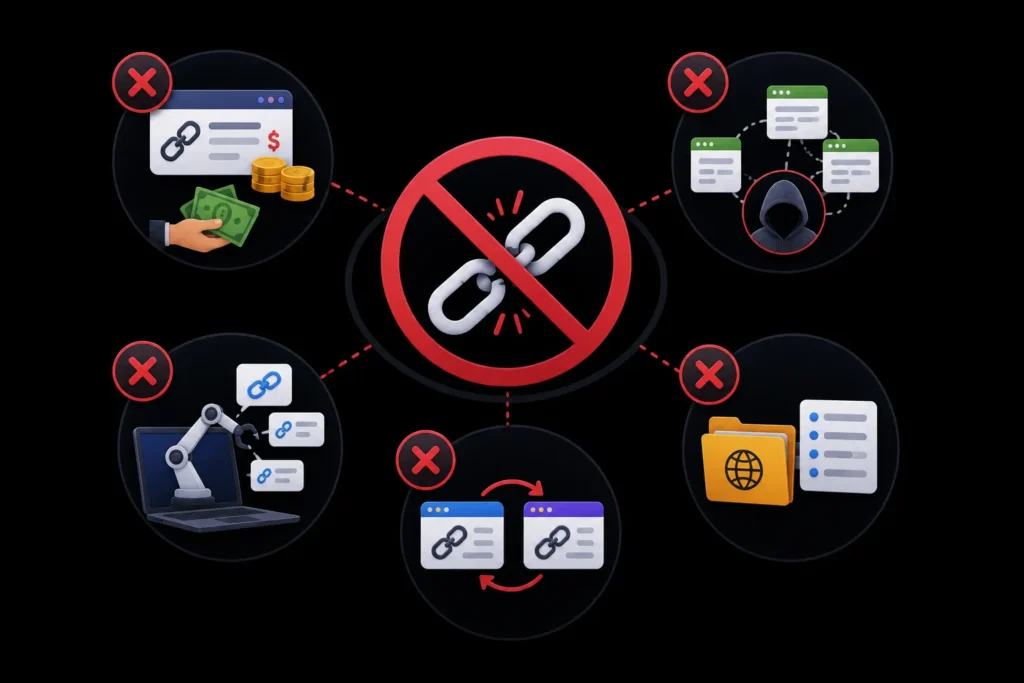
- Buying links: Google explicitly prohibits buying or selling links that pass PageRank. If detected, your site can be penalized.
- Private blog networks (PBNs): Networks of fake blogs created solely to build links. Google detects and penalizes these.
- Automated link building: Tools that automatically submit your site to thousands of directories or comment on blogs. These links are low quality and can harm your site.
- Link exchanges: “I will link to you if you link to me” arrangements. Excessive reciprocal linking looks unnatural to Google.
- Low-quality directory submissions: Most web directories are low quality and provide no SEO value. Focus on industry-specific and local directories only.
How Do I Measure Link Building?
- Links gained to target pages, and how many are editorial and relevant.
- Referral traffic and engagement from linking pages in your analytics.
- Impressions, clicks and rankings for the target pages in Search Console over several months.
- Enquiries and sales from those pages. Rankings are a means, not the goal.
Ready to Build Stronger Website Authority?
High-quality backlinks can improve your rankings, credibility, and organic traffic. Focus on relevant links earned through valuable content, outreach, and genuine industry relationships.
Want a safer link-building strategy? Get a free SEO consultation from MoxSEO.
You can also read how we work on our methodology page, see our SEO services, or look at past work in our case studies. Content that earns links starts with good content, which is where our content marketing team comes in.
Frequently Asked Questions

Ashish Khan is an SEO Specialist at MoxSEO with expertise in keyword research, on-page optimization, technical SEO, content strategy, and link building. He focuses on improving website visibility, strengthening search performance, and helping businesses attract relevant organic traffic. By combining competitor analysis, SEO audits, and data-driven optimization, Ashish supports sustainable ranking growth and stronger digital presence.