




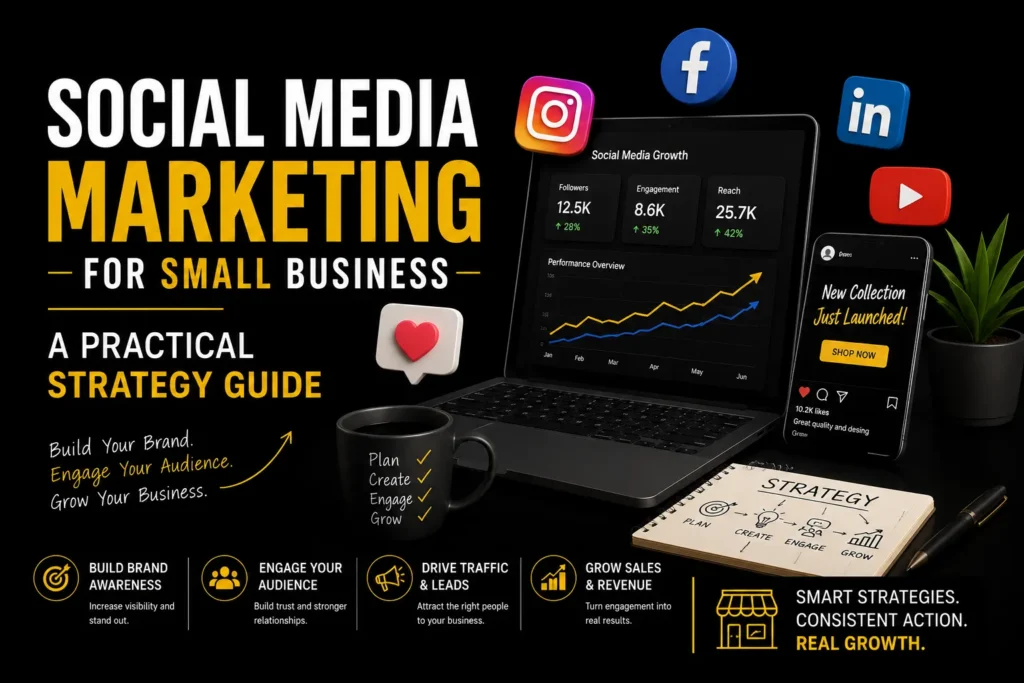
Social media marketing for small business is no longer limited to large brands with dedicated marketing teams. Customers use Instagram, Facebook, LinkedIn, YouTube, and WhatsApp to discover businesses, compare options, check reviews, and decide where to spend their money.
However, small businesses usually have limited time, smaller budgets, and fewer people available to create content. Trying to copy the social media strategy of a large company can quickly lead to wasted effort and inconsistent posting.
The right approach is to focus on the platforms your customers actually use, create helpful content consistently, and measure whether social media is generating enquiries, website visits, bookings, or sales.
This guide explains how to build an affordable and practical social media marketing strategy for your small business.
For broader digital growth support, read our guide to choosing a digital marketing agency for small business.
TL;DR: Effective social media marketing for small business means choosing one or two relevant platforms, posting useful content consistently, engaging with your audience, and tracking business results. Do not try to be active everywhere. Focus on the channels that can realistically help you reach customers and generate leads.
Why Social Media Marketing Matters for Small Businesses
Social media allows small businesses to reach potential customers without needing a large advertising budget. It also gives customers a direct way to understand your brand, ask questions, and see how your business operates.
When managed correctly, social media can support several business goals.
Increase Brand Awareness
Every useful post gives your business another opportunity to appear in front of potential customers.
People may discover your business through a reel, local Facebook post, LinkedIn update, customer review, or shared video. Even when they do not buy immediately, regular visibility helps them remember your brand.
Build Customer Trust
Customers are more likely to contact a business that appears active, reliable, and responsive.
Regular posts, customer testimonials, team photos, product demonstrations, and behind-the-scenes content can make your business feel more trustworthy.
Responding to comments and messages also shows that your business values customer communication.
Generate Leads and Sales
Social media should support more than likes and follower growth.
A good strategy can direct people to your website, WhatsApp, contact form, booking page, physical store, or product catalogue.
The goal is to create a clear path from content discovery to customer action.
Compete with Larger Businesses
Large companies may have bigger advertising budgets, but small businesses often have stronger local knowledge, direct customer relationships, and more authentic stories.
Social media gives you an opportunity to communicate these strengths and build a loyal audience around your business.
Understand Your Customers Better
Comments, direct messages, polls, questions, and content performance can reveal what your customers care about.
You can use this information to improve your services, create better offers, answer common questions, and produce more relevant content.
Set Clear Social Media Goals
Before selecting platforms or creating posts, decide what you want social media to achieve.
Your goals may include:
- Increasing local brand awareness
- Generating enquiries
- Driving website traffic
- Receiving more bookings
- Promoting products
- Building a professional reputation
- Increasing store visits
- Creating repeat customers
Avoid vague goals such as “becoming popular” or “getting more followers.”
A small but relevant audience that regularly contacts your business is more valuable than thousands of followers who never engage or buy.
Choose one or two primary goals for the next three months. These goals will guide your content, platform selection, and advertising strategy.
Choosing the Right Social Media Platforms
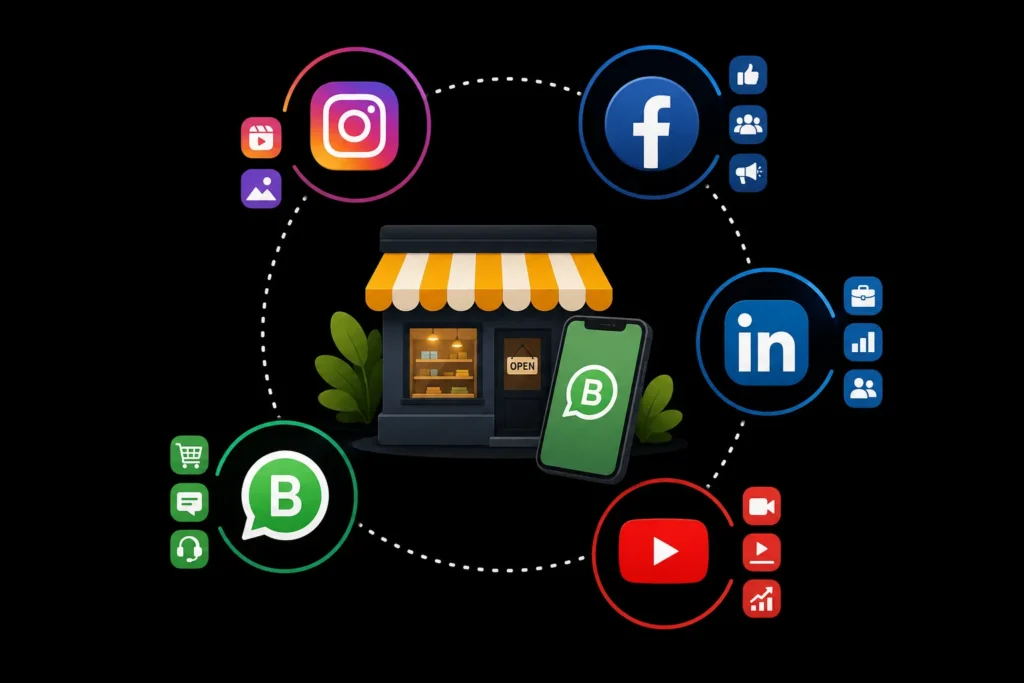
Small businesses do not need to be active on every platform.
Trying to manage Instagram, Facebook, LinkedIn, YouTube, X, Pinterest, and other platforms at the same time often results in low-quality content and inconsistent posting.
Choose platforms based on your customers and your type of business.
Instagram is suitable for visually appealing businesses such as:
- Restaurants and cafés
- Salons and beauty businesses
- Fitness centres
- Clothing and jewellery brands
- Interior designers
- Travel companies
- Photographers
- Retail stores
Use reels, carousels, product photos, customer videos, stories, and behind-the-scenes content.
Instagram can help improve brand visibility, but consistency and visual quality are important.
Facebook can work well for local businesses, community-based services, events, and businesses targeting older customer groups.
It is useful for:
- Local offers
- Customer reviews
- Events
- Community updates
- Business announcements
- Facebook Groups
- Location-based advertising
A local business can also use Facebook to answer customer questions and promote offers within a specific area.
LinkedIn is valuable for B2B companies, consultants, agencies, recruiters, software businesses, and professional service providers.
Useful content includes:
- Industry insights
- Business lessons
- Case studies
- Company updates
- Professional advice
- Client success stories
- Team achievements
LinkedIn content should demonstrate experience and expertise rather than relying heavily on direct promotion.
YouTube
YouTube is suitable for businesses that can create tutorials, demonstrations, interviews, reviews, or educational videos.
Video ideas may include:
- How-to guides
- Product demonstrations
- Customer questions
- Service explanations
- Industry advice
- Before-and-after results
- Behind-the-scenes processes
YouTube videos can continue receiving views long after they are published. They can also appear in Google search results.
Read our YouTube SEO services guide for more information about video optimisation.
WhatsApp Business
WhatsApp Business is especially useful for small businesses in India.
It can be used for:
- Customer enquiries
- Product catalogues
- Appointment confirmations
- Order updates
- Broadcast messages
- Customer support
- Quick replies
Avoid sending frequent promotional messages without permission. Use WhatsApp primarily for helpful communication and relevant offers.
Create a Simple Content Strategy
A content strategy helps you decide what to post and prevents last-minute confusion.
Your strategy does not need to be complicated. Start by selecting three to five content categories that support your business goals.
Educational Content
Educational posts answer questions and help customers make informed decisions.
Examples include:
- Tips
- Common mistakes
- How-to posts
- Product care advice
- Service explanations
- Frequently asked questions
Helpful content positions your business as knowledgeable and gives people a reason to follow your page.
Behind-the-Scenes Content
Show customers how your business operates.
You can share:
- Your team at work
- Product preparation
- Office or store activities
- Packaging processes
- Service delivery
- Event preparation
- Daily business routines
This type of content makes your business feel more human and authentic.
Customer Testimonials
Positive reviews can reduce hesitation and build trust.
Share customer feedback, short video testimonials, before-and-after results, or customer success stories.
Always ask permission before sharing identifiable customer details or images.
User-Generated Content
User-generated content includes photos, videos, reviews, and posts created by your customers.
Encourage customers to tag your business when they use your product or visit your location. You can then repost suitable content with permission.
This provides social proof and helps create a stronger community around your brand.
Promotional Content
Promotional posts may include:
- Discounts
- New products
- Seasonal offers
- Events
- Limited-time packages
- New services
- Product launches
Promotional content is important, but it should not dominate your feed.
A useful guideline is to make most of your content educational, entertaining, or trustworthy, while keeping direct promotions limited.
Follow a Realistic Posting Schedule
Consistency matters more than posting every day.
For many small businesses, publishing three or four quality posts per week is enough. You can also use stories for quick updates, offers, polls, and behind-the-scenes moments.
A practical weekly schedule could include:
- One educational post
- One reel or video
- One customer story or testimonial
- One promotional post
Choose a schedule your team can maintain for several months.
Posting daily for two weeks and then disappearing for a month is less effective than following a consistent weekly routine.
Create a Monthly Content Calendar
A content calendar helps you plan posts in advance.
Your calendar should include:
- Publication date
- Platform
- Content topic
- Content format
- Caption
- Required image or video
- Call to action
- Approval status
Plan content around festivals, local events, product launches, seasonal demand, promotions, and common customer questions.
Preparing content in batches can save time. For example, you can record several short videos during one monthly content shoot and publish them gradually.
Use Clear Calls to Action
Every post does not need to sell something, but customers should understand what to do next.
Possible calls to action include:
- Visit our website
- Send us a message
- Book an appointment
- Call for details
- Save this post
- Share your experience
- Download the guide
- Visit our store
- Request a quote
Use one clear action rather than including several confusing instructions in the same post.
Engage with Your Audience
Social media marketing is not only about publishing content.
Respond to comments, direct messages, reviews, questions, and mentions. Quick responses can improve trust and prevent potential customers from contacting a competitor.
You can also encourage interaction through:
- Polls
- Questions
- Quizzes
- Comment prompts
- Customer stories
- Live sessions
- User-generated content
Avoid using unrelated engagement tactics simply to increase comments. Focus on conversations that are relevant to your customers and business.
Affordable Social Media Tools for Small Businesses
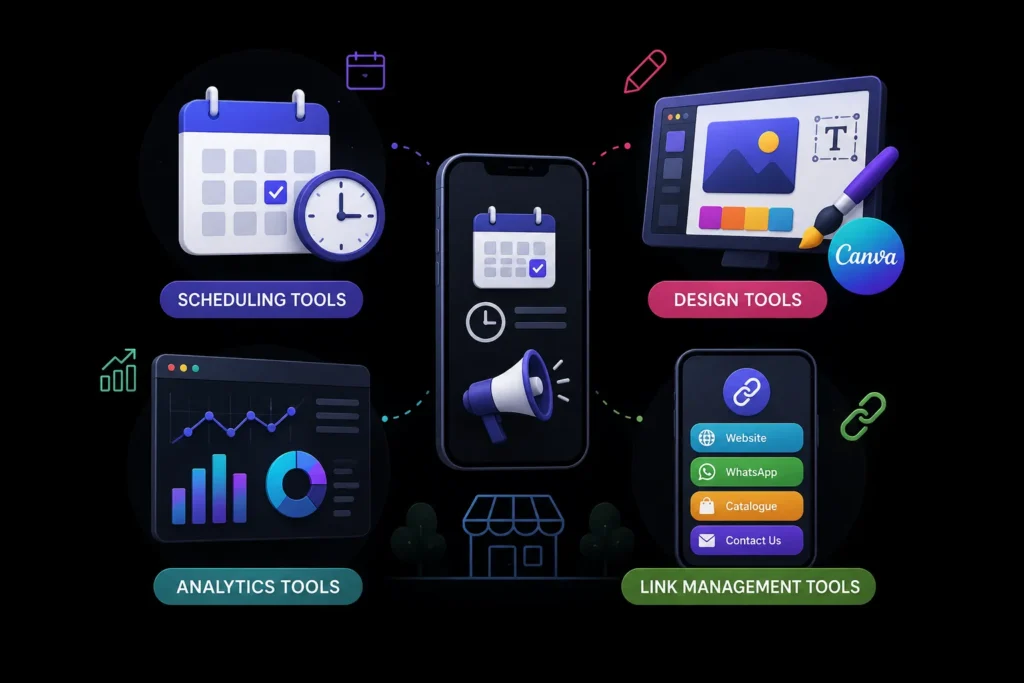
You do not need expensive software to manage your social media activity.
Scheduling Tools
Meta Business Suite allows businesses to schedule content for Facebook and Instagram.
Other scheduling platforms may help manage multiple channels and organise content calendars.
Scheduling posts in advance can improve consistency and reduce daily workload.
Design Tools
Canva is useful for creating social media posts, stories, carousels, thumbnails, and basic video content.
Create a few branded templates using consistent fonts, colours, and layouts. This helps your content look professional without designing every post from the beginning.
Analytics Tools
Most platforms provide built-in analytics.
Review information such as:
- Reach
- Engagement
- Profile visits
- Website clicks
- Video views
- Messages
- Leads
- Follower growth
Use this data to identify which topics and formats perform best.
Link Management Tools
A bio-link tool can help direct users to multiple important pages, such as your website, contact form, WhatsApp, product catalogue, or booking page.
Keep the number of links limited so users can quickly find the most important action.
Social Media Advertising for Small Businesses
Organic content can build trust, but paid advertising can help your business reach new customers faster.
Small businesses do not need to begin with a large budget. Start with a controlled amount and test your campaigns carefully.
Start with a Small Budget
A local business may begin with approximately Rs 500 to Rs 1,000 per day, depending on its industry, location, and goals.
Do not increase the budget until you understand which audience, offer, and creative combination is producing results.
Use Local Targeting
Local businesses should focus advertising on the areas they can realistically serve.
For example, a salon, restaurant, clinic, gym, or retail store may target customers within a specific radius.
Avoid spending money on audiences outside your service location.
Promote a Clear Offer
Your advertisement should explain:
- What you offer
- Who it is for
- Why it is useful
- What the customer should do next
A strong offer is more important than complicated ad design.
Test Different Creatives
Test different images, videos, headlines, calls to action, and offers.
Avoid making major decisions after only one advertisement. Small tests can help you understand what attracts your audience before increasing the campaign budget.
Use Retargeting
Retargeting allows you to show advertisements to people who have already visited your website, watched your videos, or engaged with your social media content.
These audiences already know your brand and may be more likely to enquire or purchase.
For broader advertising guidance, read our guide to PPC management in India.
How Much Does Social Media Marketing Cost for Small Businesses?
The cost depends on whether you manage social media internally or hire external support.
DIY Social Media Marketing
A do-it-yourself approach may cost approximately Rs 0 to Rs 5,000 per month for design, scheduling, and other tools.
This option saves money but requires your time for planning, content creation, publishing, engagement, and reporting.
Hiring a Freelancer
A freelancer may charge approximately Rs 10,000 to Rs 25,000 per month.
Services may include basic strategy, content creation, caption writing, scheduling, and account management.
Confirm the number of posts, platforms, videos, revisions, and reports included.
Hiring a Social Media Agency
A small business social media package may cost approximately Rs 15,000 to Rs 50,000 per month.
Agency services may include strategy, content planning, graphic design, copywriting, posting, reporting, and basic advertising management.
Photography, professional video production, influencer fees, and advertising spend may be charged separately.
Mumbai-based businesses can also read our guide to choosing a social media marketing agency in Mumbai.
Measure the Right Results
Follower growth can be useful, but it should not be your only performance metric.
Track results connected to your business goals, such as:
- Website visits
- WhatsApp enquiries
- Phone calls
- Contact-form submissions
- Bookings
- Store visits
- Product purchases
- Cost per lead
- Advertising return
- Repeat customers
Review performance monthly and identify which content generated meaningful action.
Continue producing content that supports results and reduce effort on formats that repeatedly fail to perform.
Common Social Media Mistakes to Avoid
Small businesses often struggle because they make social media more complicated than necessary.
Avoid these common mistakes:
- Trying to use every platform
- Posting only promotional content
- Buying fake followers
- Ignoring comments and messages
- Using low-quality images
- Posting without a clear goal
- Copying competitors
- Changing strategy every week
- Focusing only on likes
- Running ads without conversion tracking
A simple, consistent strategy usually performs better than an aggressive plan that cannot be maintained.
Build a Social Media Strategy That Supports Growth
Social media marketing for small business does not require a large team or an expensive collection of tools. It requires clear goals, the right platforms, useful content, consistent posting, audience engagement, and regular performance tracking.
Start with one or two platforms where your customers are already active. Create a realistic monthly content plan and focus on answering customer questions, building trust, and encouraging meaningful action.
Need help with your small business social media marketing? Get a free consultation from MoxSEO and discover how a focused content and advertising strategy can help your business generate more visibility, enquiries, and sales.
Frequently Asked Questions
How often should a small business post on social media?
Posting three or four times per week on one or two platforms is enough for many small businesses. Consistency and content quality matter more than posting every day.
Which social media platform is best for a small business?
It depends on your customers and industry. Instagram suits visual consumer businesses, Facebook supports local engagement, LinkedIn works well for B2B companies, and YouTube is useful for educational video content.
Do small businesses need paid social media advertising?
Paid advertising is useful for reaching people who do not already follow your business. Start with a small budget, target a relevant audience, and increase spending only when the campaign generates measurable results.
How long does social media marketing take to work?
Organic social media may take three to six months to build consistent reach and engagement. Paid campaigns can generate earlier results, but performance depends on targeting, creative quality, budget, offer, and landing-page experience.
Can I manage social media marketing myself?
Yes. Many small businesses can begin by managing one or two platforms internally. A freelancer or agency may become useful when content production, advertising, or customer engagement requires more time than your team can provide.

Samruddhi Kadam is an SEO Associate at MoxSEO with 2 years of experience in keyword research, on-page SEO, content optimization, competitor analysis, and website performance tracking. She focuses on improving organic visibility, creating search-friendly content, and identifying practical opportunities to strengthen rankings. Through consistent analysis and data-driven execution, Samruddhi helps businesses attract relevant traffic and build a stronger presence in search results.